Cabbage aphid
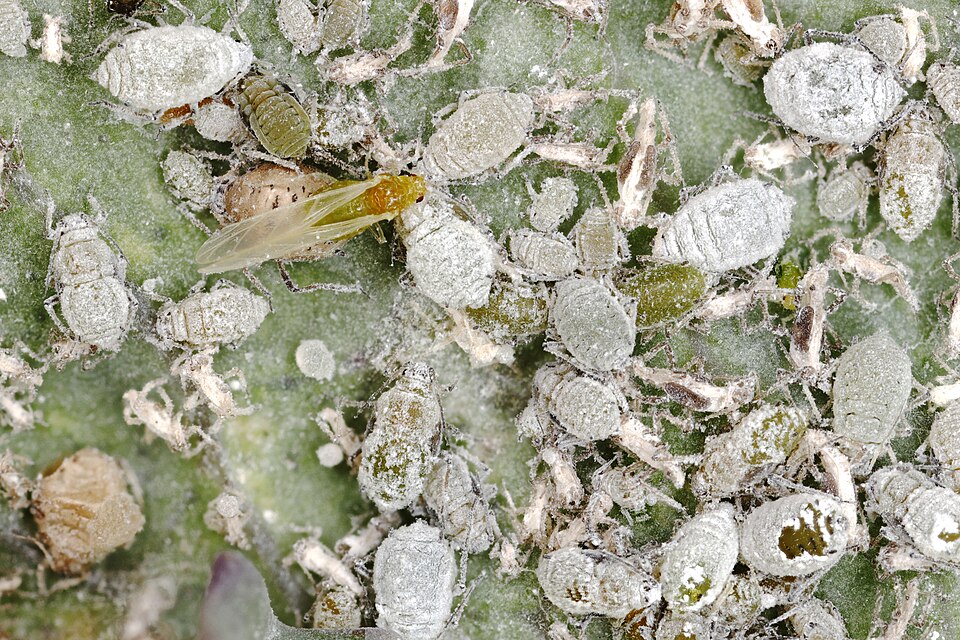
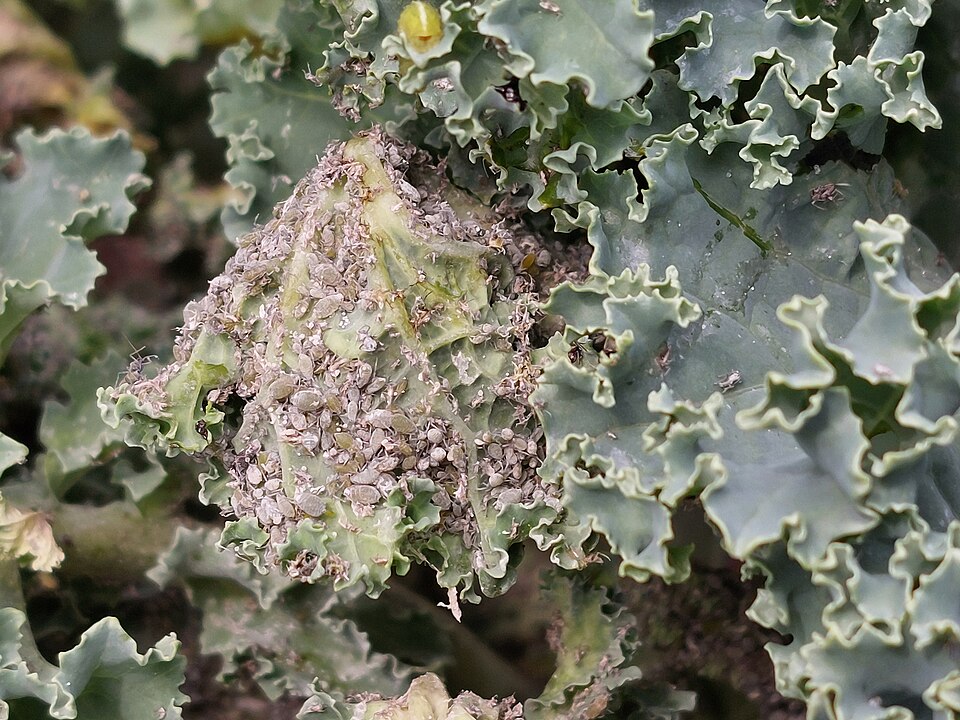
The aphid Brevicoryne brassicae forms grey-green, waxy-coated colonies in the heart of the plant and on leaf undersides. It sucks sap and, along the way, transmits brassica viruses.
Symptom photos
Symptoms
- Dense, grey-green colonies covered in a white waxy bloom
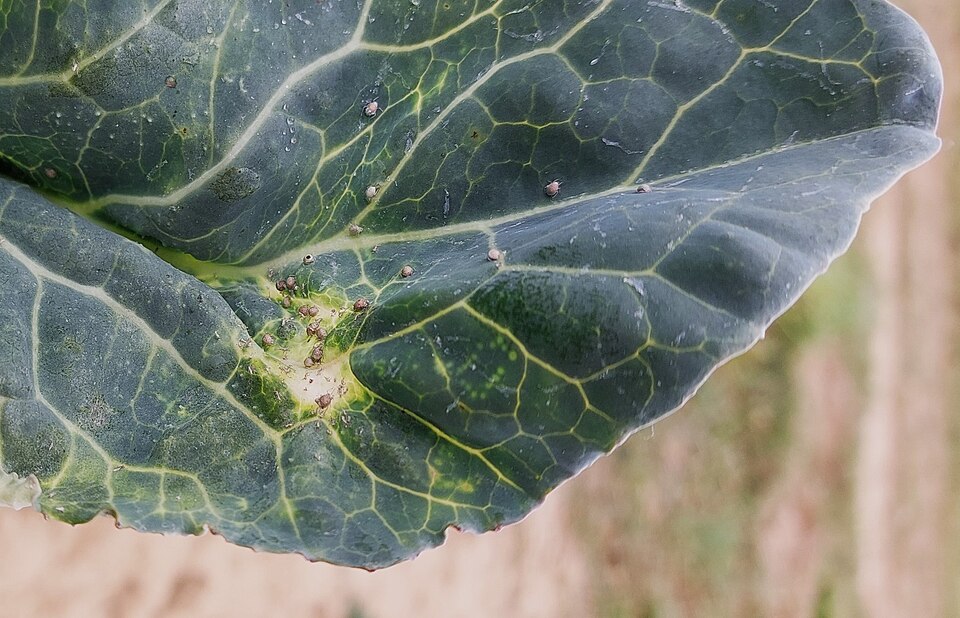
- Colonies concentrated in the heart of the plant and under the leaves
- Leaves curling and puckering
- Pale flecking and mottling of the blade where the aphids feed
- Sticky honeydew followed by black sooty mold
What it does to the crop
- Growth checked and heads deformed
- Heads contaminated with aphids that are hard to wash out
- Transmission of brassica mosaic viruses
- Reduced market quality of the crop
What encourages it
- Warm, dry weather in July and August
- Too much nitrogen and lush, soft leaves
- Other brassicas and brassica weeds nearby
- No beneficial insects around the crop
Prevention
- Check leaf undersides regularly from June
- Sow nectar plants for ladybirds and hoverflies
- Cover young plants with fleece
- Remove brassica weeds from around the bed
- Keep nitrogen feeding moderate
⚠️ Before you reach for a spray
This atlas is informational and still growing — different diseases can look almost identical. Confirm the diagnosis and read the product label before applying any plant protection product. If you are unsure, ask your local extension or advisory service.
Keep the disease atlas with you in the garden
In the app you can identify a disease from photos, work out the spray dose for your own bed and log the treatment in your task calendar. Free, no sign-up, works offline.
Open the atlas in the app →