White rot on onion
A very serious soil-borne disease caused by Stromatinia cepivora. The fungus breaks down the base of the bulb and the roots, and its black sclerotia survive in the soil for up to 20 years.
Symptom photos
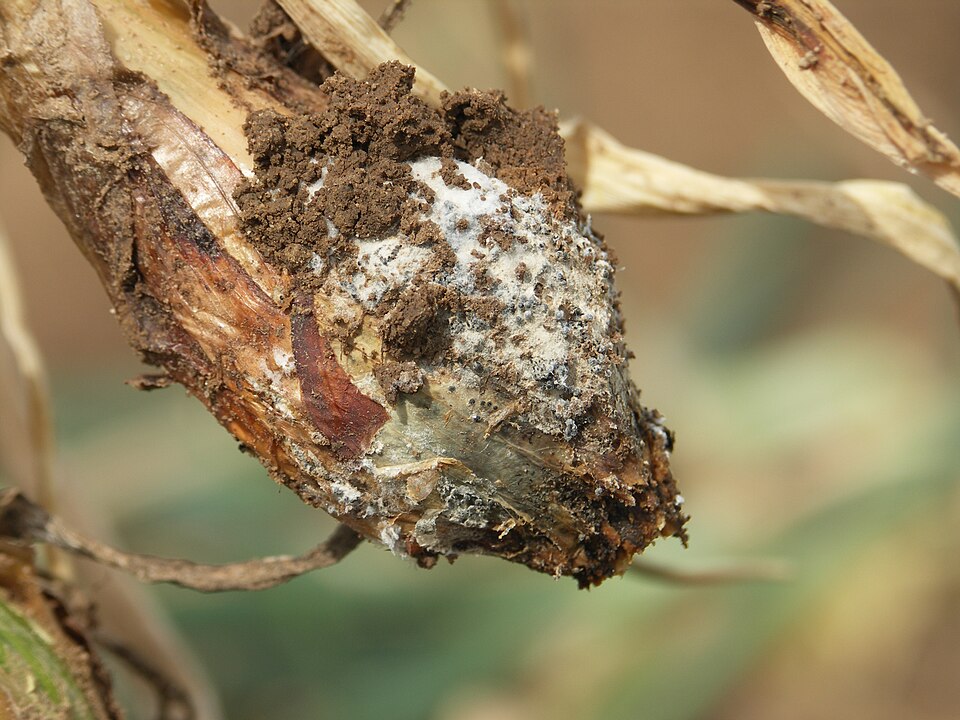
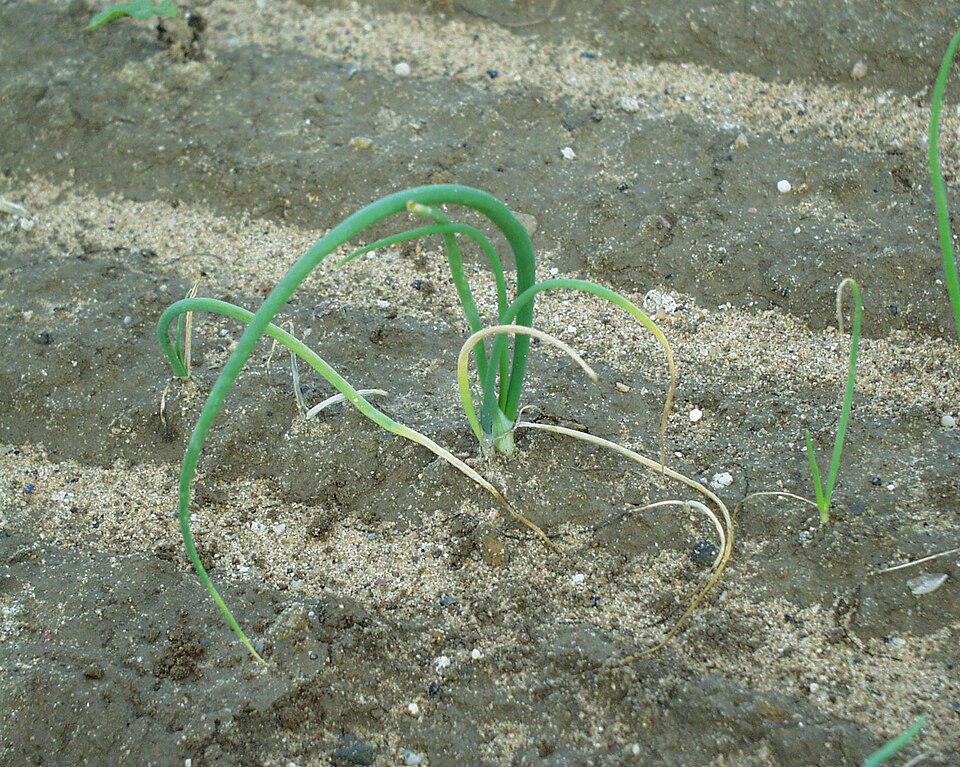
Symptoms
- Leaves yellowing and wilting, starting with the oldest
- White, cottony fungal growth on the base plate and roots
- Small black sclerotia the size of poppy seeds within the growth
- Soft, watery rot at the base of the bulb
- Plants lifting easily out of the soil, with no roots
What it does to the crop
- Plants collapsing in patches that grow year on year
- The crop lost entirely on the affected part of the plot
- Soil contaminated with sclerotia for 15-20 years
- The site ruled out for allium crops
What encourages it
- Cool soil at 10-20°C
- Wet, heavy soils
- Alliums grown as a monoculture
- Sclerotia carried in soil on tools and footwear
Prevention
- Rotate over a very long cycle — at least 8 years without alliums
- Remove infected plants with a spadeful of soil and burn them
- Wash tools and footwear after working on an affected site
- Avoid moving soil between beds
- Plant healthy, inspected onion sets
⚠️ Before you reach for a spray
This atlas is informational and still growing — different diseases can look almost identical. Confirm the diagnosis and read the product label before applying any plant protection product. If you are unsure, ask your local extension or advisory service.
Keep the disease atlas with you in the garden
In the app you can identify a disease from photos, work out the spray dose for your own bed and log the treatment in your task calendar. Free, no sign-up, works offline.
Open the atlas in the app →