Onion fly
Larvae of the fly Delia antiqua eat out the inside of young bulbs and the base of the leaves. The first generation in May can wipe out a whole direct-sown crop, because young plants have no chance to recover.
Symptom photos
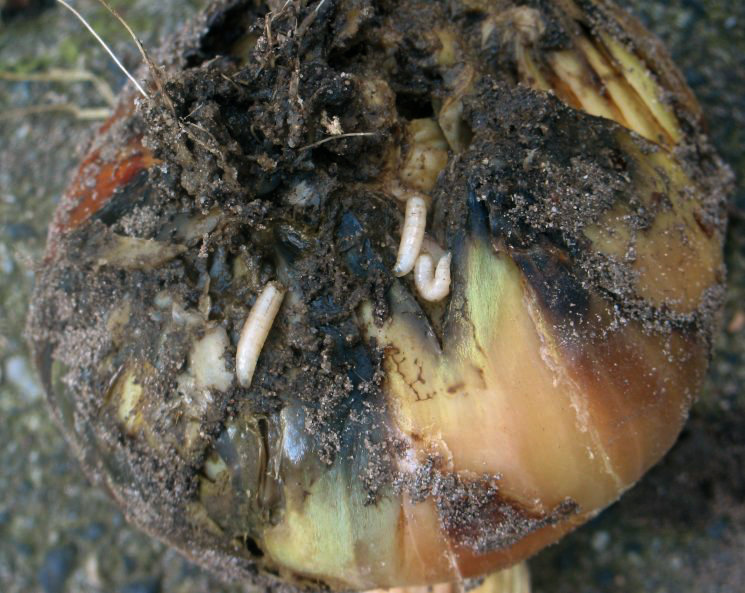
Symptoms
- Leaves of young plants yellowing and wilting
- White, legless larvae in the base of the bulb
- The inside of the bulb eaten out and foul-smelling
- Plants dying and toppling over
- Gaps in the row where seedlings have died
What it does to the crop
- Young plants lost and a thin stand
- Secondary soft rots in the damaged bulbs
- Unmarketable bulbs that will not store
- Losses of up to tens of percent in a direct-sown crop
What encourages it
- First fly flight in May, second in July
- Light soils that have dried out
- Onions grown after onions or right beside them
- Weak, slow-growing plants
Prevention
- Cover the crop with fleece from sowing for the first few weeks
- Intercrop with carrots to mask the onion smell
- Keep distance from last year's allium plots
- Deep autumn cultivation to destroy pupae in the soil
- Remove and destroy infested plants along with the larvae
⚠️ Before you reach for a spray
This atlas is informational and still growing — different diseases can look almost identical. Confirm the diagnosis and read the product label before applying any plant protection product. If you are unsure, ask your local extension or advisory service.
Keep the disease atlas with you in the garden
In the app you can identify a disease from photos, work out the spray dose for your own bed and log the treatment in your task calendar. Free, no sign-up, works offline.
Open the atlas in the app →