Common scab on potato
A bacterial disease (Streptomyces scabies) affecting the tuber skin. It does not cause rotting and does not develop in store, but the scabs make tubers unsaleable and increase peeling waste.
Symptom photos
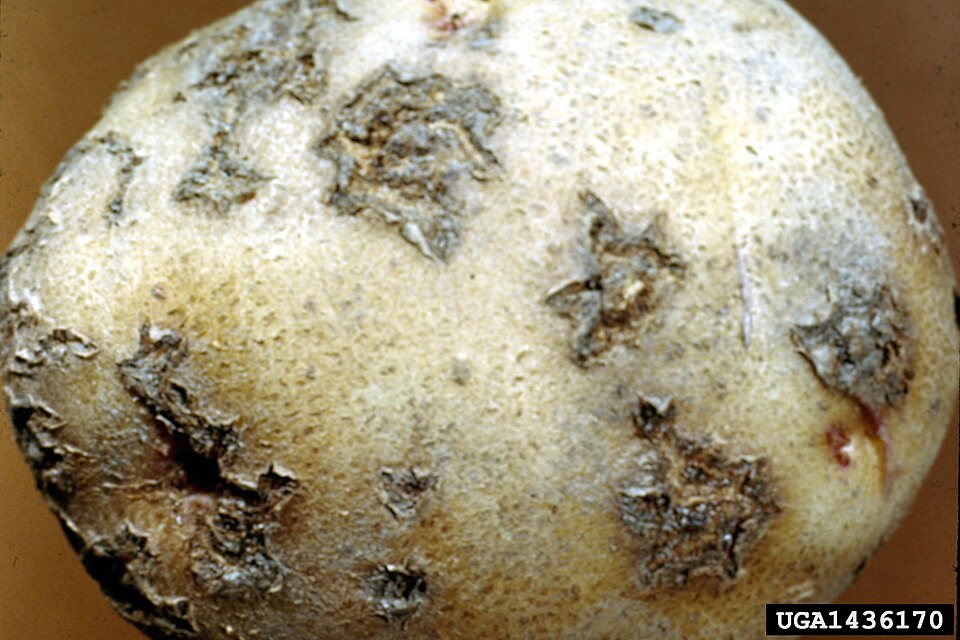
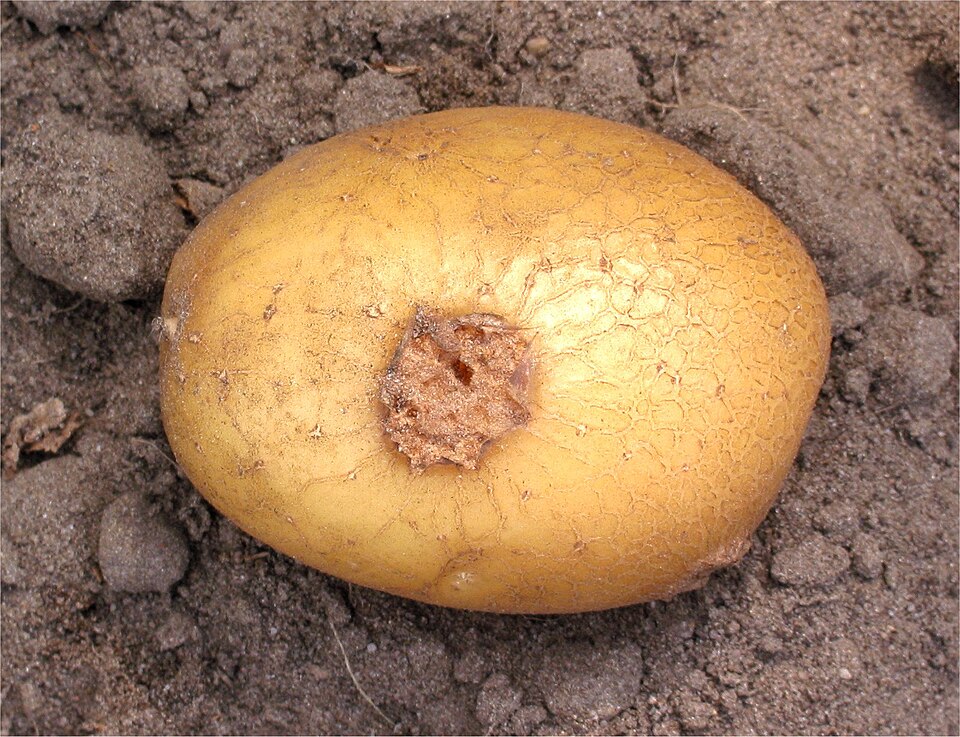
Symptoms
- Irregular, corky scabs on the tuber skin
- Scabs flat, raised or pitted, with a rough surface
- Healthy, pale flesh beneath the scab, with no rotting
- No unpleasant smell
- Symptoms on the tubers only — the top growth is healthy
What it does to the crop
- Unmarketable tubers and heavy losses in peeling
- Poorer appearance of ware potatoes
- Affected tubers are not fit to use as seed
- Skin damage opening the way to rots
What encourages it
- Soils above pH 5.5, especially freshly limed ones
- Dry, warm weather while the tubers are setting
- Fresh manure or lime applied before planting
- Light soils that have dried out
Prevention
- Keep soil pH between 5.0 and 5.5 for potatoes
- Irrigate while tubers are setting (4-6 weeks after emergence)
- Do not lime the soil immediately before a potato crop
- Plant healthy, certified seed potatoes
- Grow less susceptible varieties and rotate on a 3-4 year cycle
⚠️ Before you reach for a spray
This atlas is informational and still growing — different diseases can look almost identical. Confirm the diagnosis and read the product label before applying any plant protection product. If you are unsure, ask your local extension or advisory service.
Keep the disease atlas with you in the garden
In the app you can identify a disease from photos, work out the spray dose for your own bed and log the treatment in your task calendar. Free, no sign-up, works offline.
Open the atlas in the app →