Black scurf on potato
The fungus Rhizoctonia solani produces two quite different symptoms: black lumps of fungal resting bodies (sclerotia) on the tuber skin, and rotting, dying sprouts in the soil. The sclerotia cannot be washed off — this is not soil.
Symptom photos
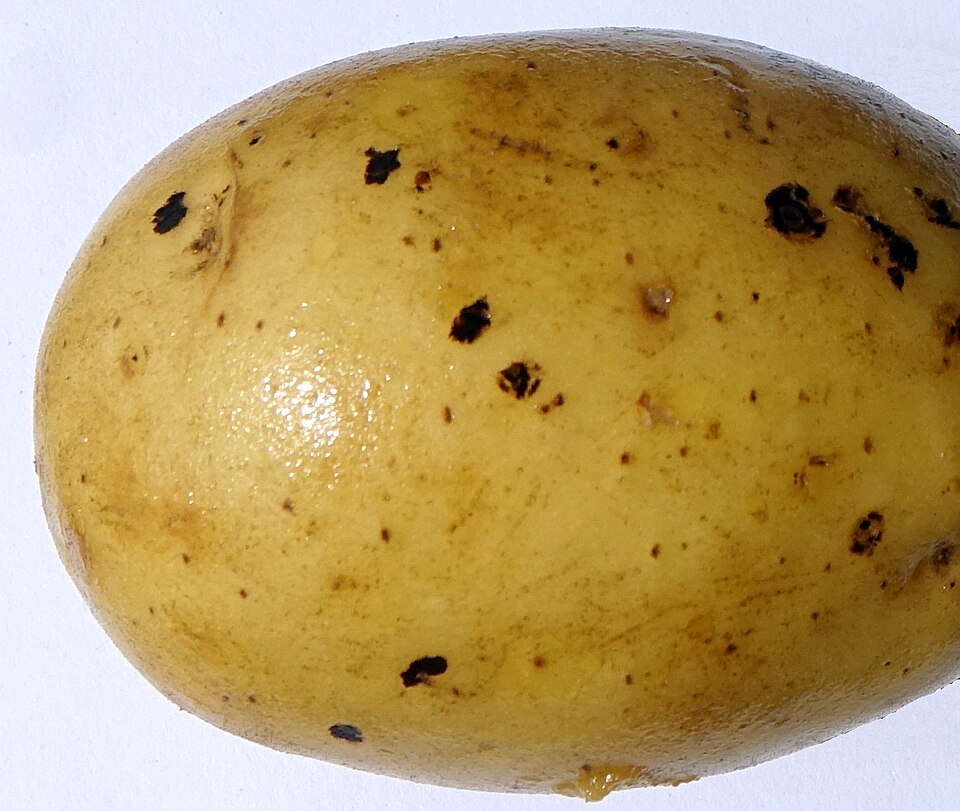
Symptoms
- Black lumps stuck to the skin, looking like dried soil
- The lumps cannot be washed off with water
- Sprouts dying and emergence uneven and thin
- Dry, brown constrictions and discoloration at the stem base
- Small, misshapen tubers, sometimes with growths
What it does to the crop
- Unmarketable tubers because of how the skin looks
- Losses at emergence after sprouts are killed
- A smaller crop with a higher proportion of small tubers
- The fungus persists in the soil and on seed tubers
What encourages it
- Cold, wet soil in spring and slow emergence
- Planting too deep into unwarmed soil
- Potatoes grown after potatoes, with debris left behind
- Heavy, compacted soils
Prevention
- Plant into warmed soil (above 8°C) and not too deep
- Use certified seed potatoes free of black sclerotia
- Rotate with a 3-4 year break
- Lift early and do not leave tubers in the ground after the haulm has died
- Clear crop debris and destroy volunteers
⚠️ Before you reach for a spray
This atlas is informational and still growing — different diseases can look almost identical. Confirm the diagnosis and read the product label before applying any plant protection product. If you are unsure, ask your local extension or advisory service.
Keep the disease atlas with you in the garden
In the app you can identify a disease from photos, work out the spray dose for your own bed and log the treatment in your task calendar. Free, no sign-up, works offline.
Open the atlas in the app →