Calcium deficiency on tomato
A physiological disorder whose best-known symptom is blossom end rot. Calcium cannot move around inside the plant — it travels only with the water stream — so the shortage hits the fastest-growing, least-transpiring tissue: fruit tips and the youngest leaves. Usually there is enough calcium in the soil; the plant simply cannot get it to where it is needed.
Symptom photos
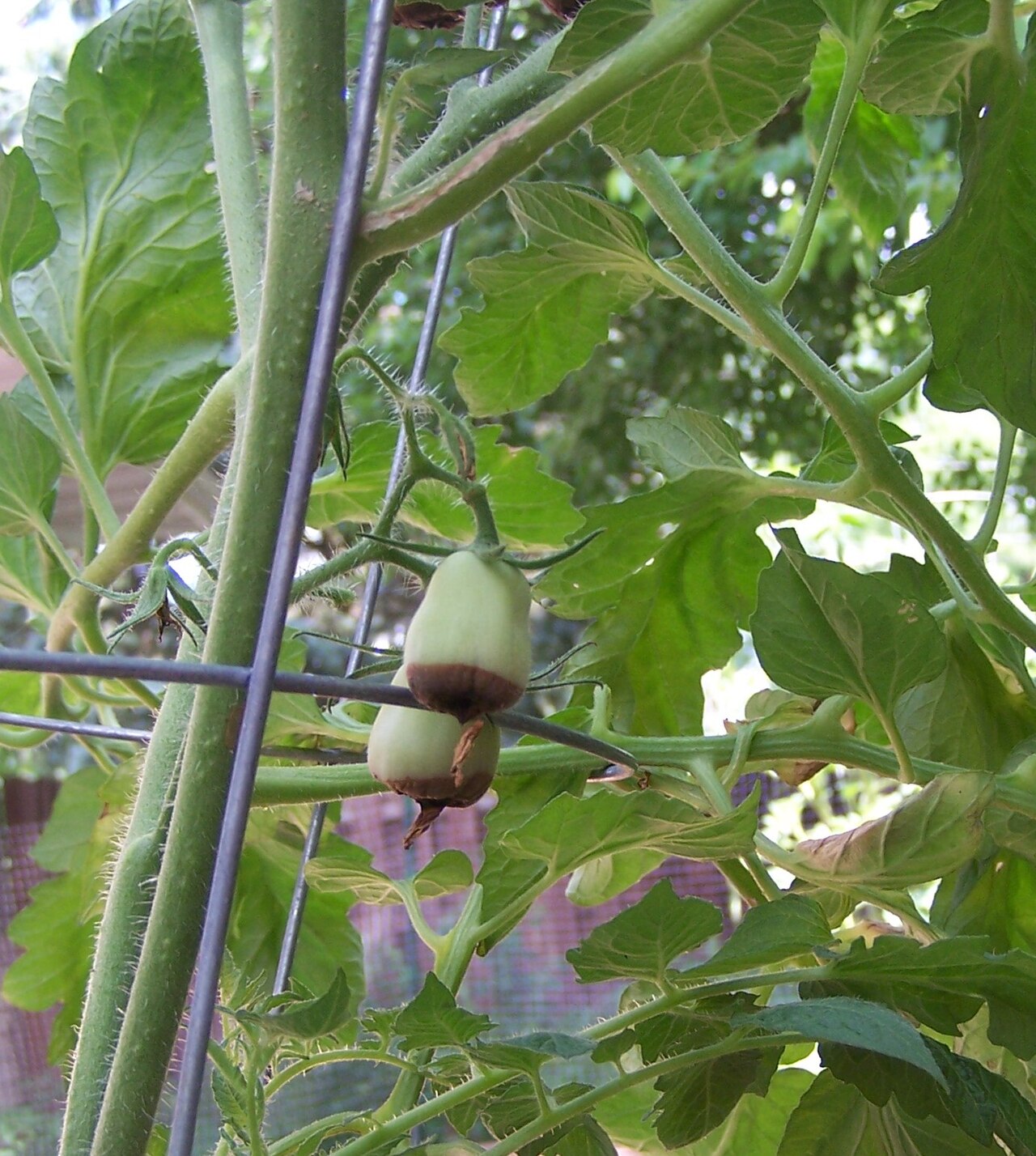
Symptoms
- A dark, watery, sunken patch at the bottom of the fruit (blossom end rot)
- The youngest leaves at the top of the plant dying back and deforming
- Edges of young leaves drying, curling and hooking over
- The growing point dying back in a severe shortage
- Chlorosis and necrosis on young leaves while older ones stay green
- Flowers and young fruitlets dropping
What it does to the crop
- Part of the crop lost — fruit with blossom end rot is inedible
- Growth at the tip held back and the plant deformed
- Damaged fruit left open to secondary fungal infection
What encourages it
- Irregular watering — alternately drying out and flooding
- High temperature and low humidity in the tunnel
- Too much ammonium nitrogen, potassium or magnesium, blocking calcium uptake
- Salty growing medium making water uptake harder
- Acid soil (pH below 5.5) and sandy soil low in calcium
- Root damage during transplanting or weeding
Prevention
- Water regularly and evenly — this matters more than the calcium feed itself
- Mulch to keep soil moisture steady
- Keep soil pH at 6.0-6.8, liming if needed
- Foliar feed with calcium chloride or calcium nitrate at the first signs
- Avoid overfeeding with nitrogen, potassium and magnesium
- Ventilate the tunnel on hot days to bring the temperature down
⚠️ Before you reach for a spray
This atlas is informational and still growing — different diseases can look almost identical. Confirm the diagnosis and read the product label before applying any plant protection product. If you are unsure, ask your local extension or advisory service.
Keep the disease atlas with you in the garden
In the app you can identify a disease from photos, work out the spray dose for your own bed and log the treatment in your task calendar. Free, no sign-up, works offline.
Open the atlas in the app →