Angular leaf spot on cucumber
A bacterial disease caused by Pseudomonas syringae pv. lachrymans, attacking leaves, stems and fruit. The bacteria travel in water droplets (rain, dew, overhead irrigation) and mechanically on hands and tools, and overwinter on crop debris and seed.
Symptom photos
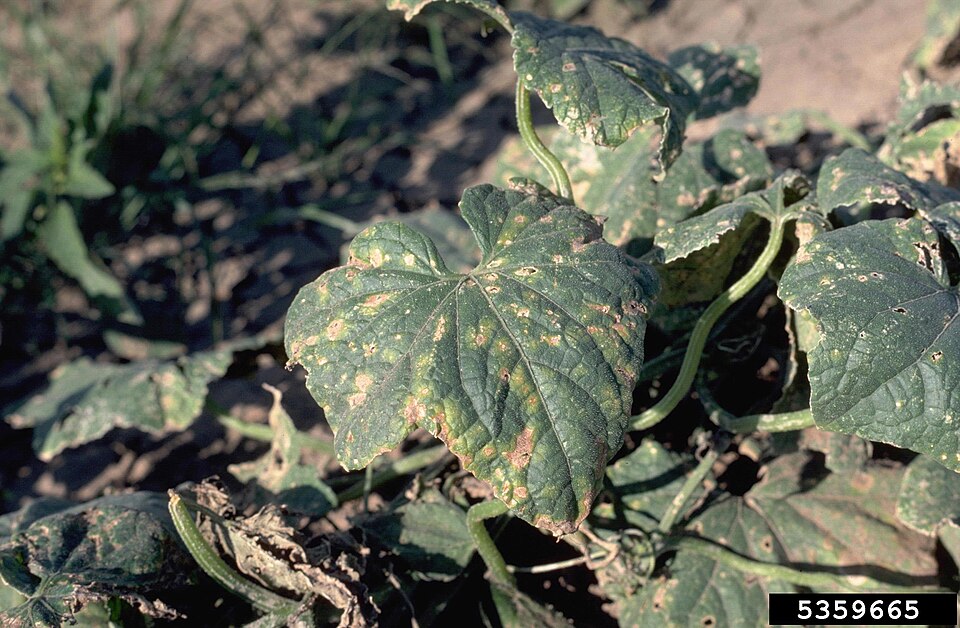
Symptoms
- Small, watery spots on leaves, boxed in by the veins (angular rather than round)
- Spots dry and brown, and the dead tissue falls out leaving holes (a shot-hole effect)
- A cloudy bacterial ooze visible on the leaf underside on damp mornings
- Small, watery, roundish spots on fruit that weep a cloudy liquid and later dry to pale scabs
- Affected fruit may rot from the inside where fungi follow in
What it does to the crop
- Lower yield and unmarketable fruit
- Weakened plants and early leaf drop
- Rapid spread across the whole crop in damp conditions
What encourages it
- High humidity, rainy or cool weather
- Long-lasting dew, or leaves left wet after overhead watering
- Crowded plants with poor air movement
- Physical damage to leaves that lets the bacteria in
Prevention
- Use plants and seed from a reliable, treated source
- Rotate with at least a 2-3 year break from cucurbits
- Water at the base in the morning and keep the leaves dry
- Do not work among the plants while they are wet
- Clear and destroy crop debris thoroughly
⚠️ Before you reach for a spray
This atlas is informational and still growing — different diseases can look almost identical. Confirm the diagnosis and read the product label before applying any plant protection product. If you are unsure, ask your local extension or advisory service.
Keep the disease atlas with you in the garden
In the app you can identify a disease from photos, work out the spray dose for your own bed and log the treatment in your task calendar. Free, no sign-up, works offline.
Open the atlas in the app →