Sclerotinia rot on carrot
A fungal disease (Sclerotinia sclerotiorum) attacking foliage and roots, and especially damaging in store. It is recognised by its white, cottony growth and hard black sclerotia.
Symptom photos
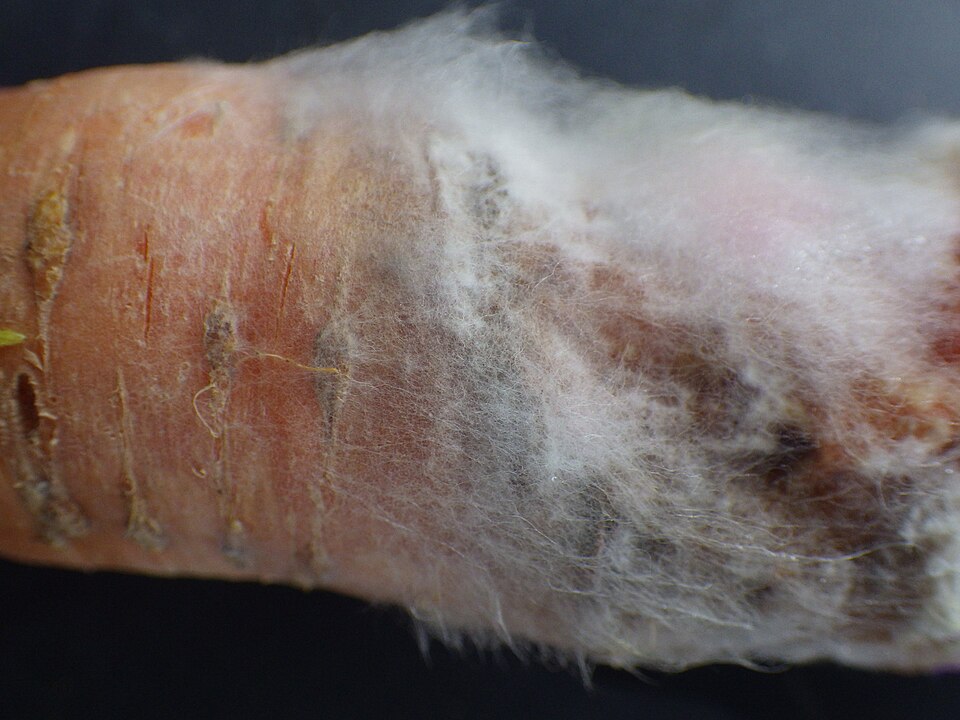
Symptoms
- Dense, white, cottony fungal growth on the root and crown
- Hard, black sclerotia the size of a pea within the growth
- Watery, soft rot of the tissue beneath the growth
- Foliage wilting and dying back in the field
- Tight pockets of rotted roots in the clamp
What it does to the crop
- Roots rotting in store and forming pockets of decay
- Crop lost in the field where the foliage is badly affected
- Sclerotia remaining in the soil and infecting crops for many years
- Other vegetables from the same plot becoming infected
What encourages it
- Cool, wet weather late in the growing season
- Temperature 15-20°C with a dense, wet canopy
- Following susceptible crops such as lettuce, beans or oilseed rape
- Temperature and humidity too high in store
Prevention
- Rotate, leaving out lettuce, beans and oilseed rape
- Sow more thinly and keep air moving through the crop
- Remove infected plants along with the sclerotia
- Cool the roots quickly to 0-1°C after lifting
- Check roots in store and take out pockets of rot
⚠️ Before you reach for a spray
This atlas is informational and still growing — different diseases can look almost identical. Confirm the diagnosis and read the product label before applying any plant protection product. If you are unsure, ask your local extension or advisory service.
Keep the disease atlas with you in the garden
In the app you can identify a disease from photos, work out the spray dose for your own bed and log the treatment in your task calendar. Free, no sign-up, works offline.
Open the atlas in the app →